Blog
Toolblox 2.0 — The most powerful platform for creating custom smart-contracts with no-code
 Mon, 13 Jan 2025 22:10:02 GMT by Silver / Toolblox
Toolblox 2.0 — The most powerful platform for creating custom smart-contracts with no-code
Today we are proud to announce a significant update to Toolblox which contains version 2 of the Contract Maker. More capability, better user-experience, still no coding!
New features in a nutshell:
- Reorderable multi-level visual coding
- New structural code blocks: For-each, try-catch, if
- New property types: list, maps, custom types, hash
- Global methods
- Oracle integration
- New flat visuals and other UI tweaks (paging, etc)
- Advanced AI support
Reorderable multi-level visual coding
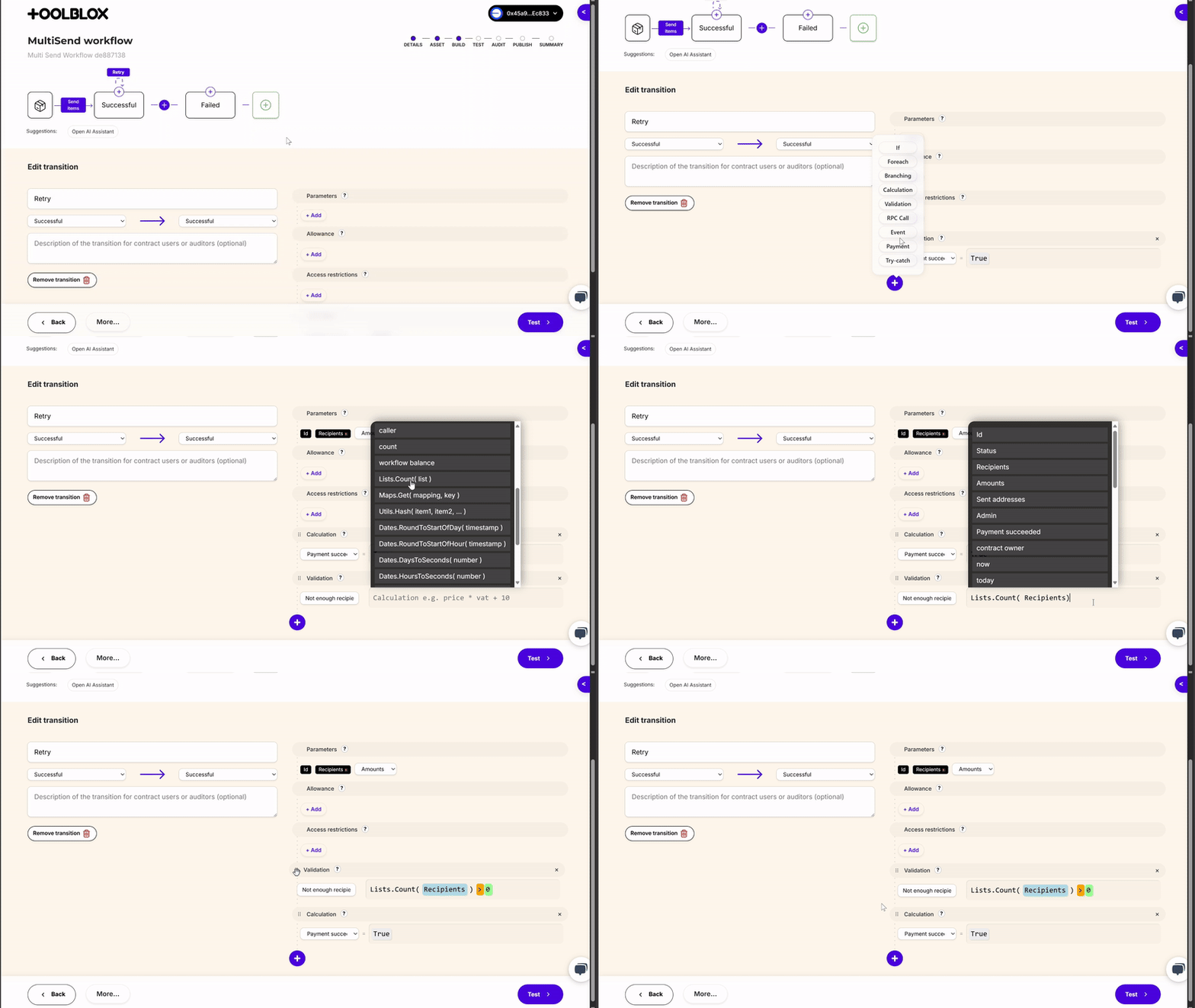
It is now possible to add any number of elements and nested code blocks. The goal is to be able to make it possible to cater to more complex use-cases and be able to digitalize any business process as a smart-contract.
New structural code blocks
These are a couple of the new building blocks that unlock key capabilities.
For-each block
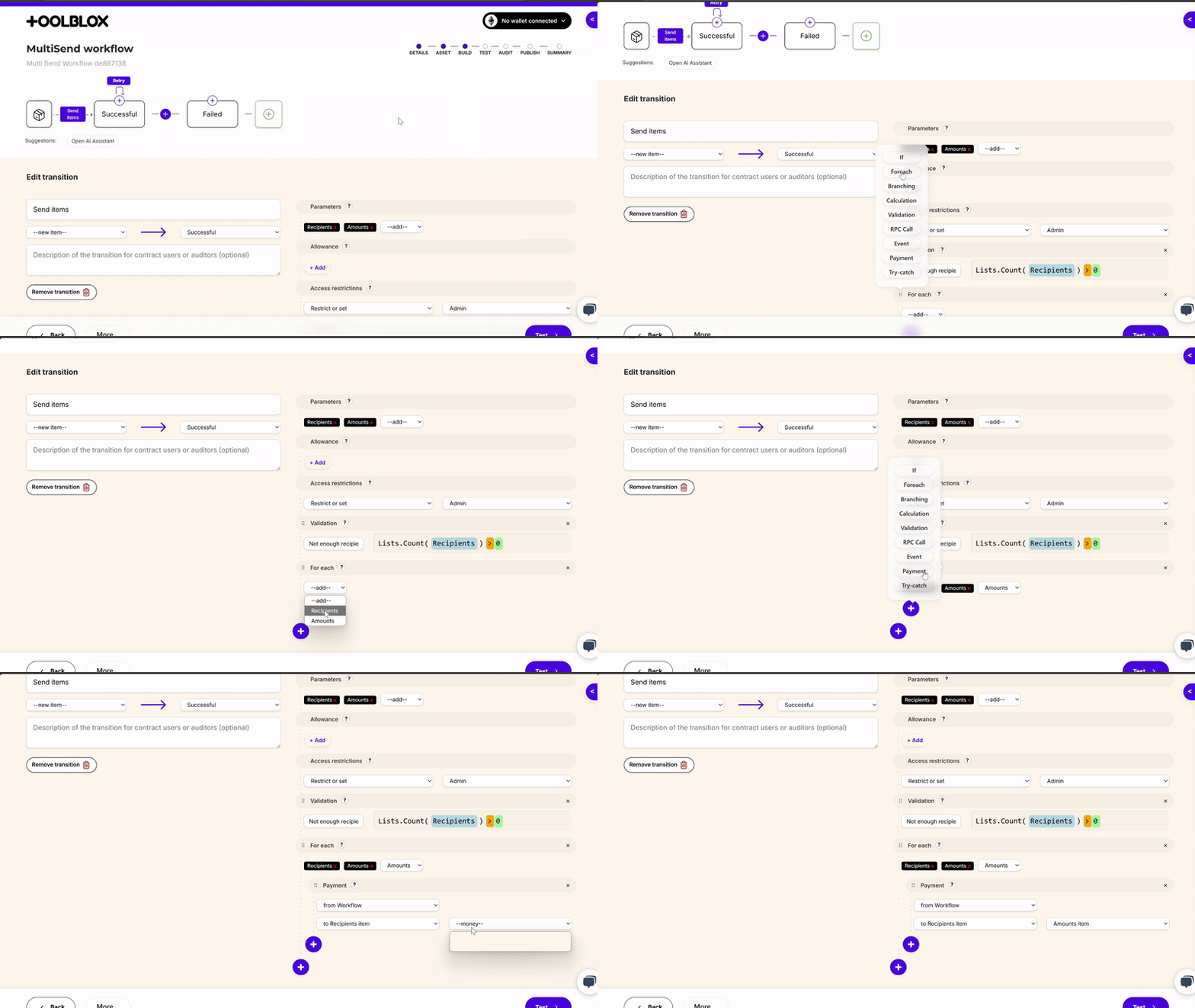
For multi-senders, multi-swaps or advanced validation — it is still sometimes necessary to conduct loops over arrays. Even if it is not that gas efficient and comes with additional risks (check out the try-catch block).
When defining the for-each block, you can specify one or multiple lists to loop over. The generated smart-contract automatically adds validation to check that the lists are of the same size. List items are available as properties inside the for-each loop.
Try-catch block
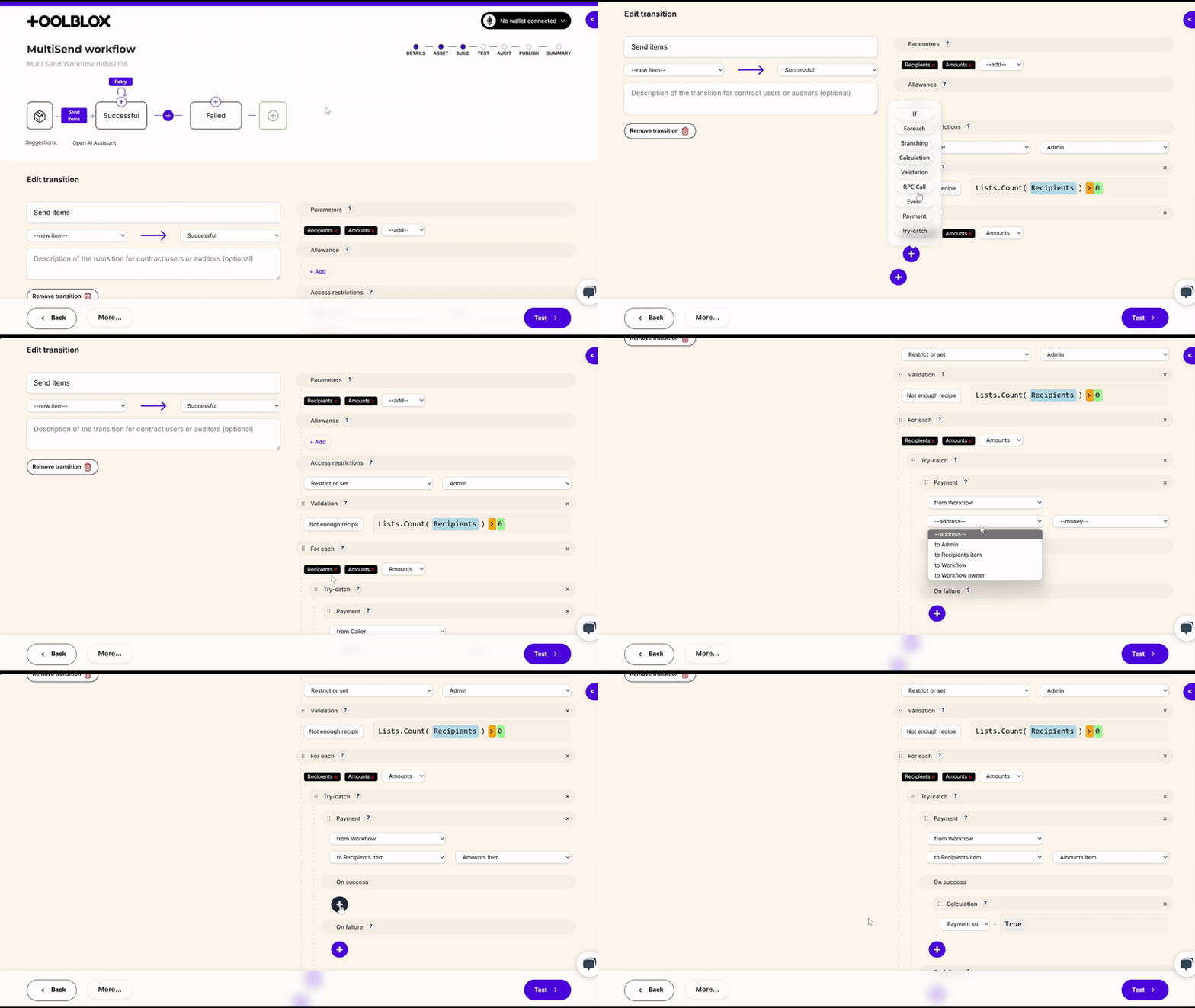
Try catch block is a special-purpose block that allows you to add defenses against issues arising from calling external contracts. This includes payments. If you think there might be issues when paying an unknown wallet address or executing methods of a volatile smart-contract, the try-catch block can offer ways to deal with this situation.
The if block
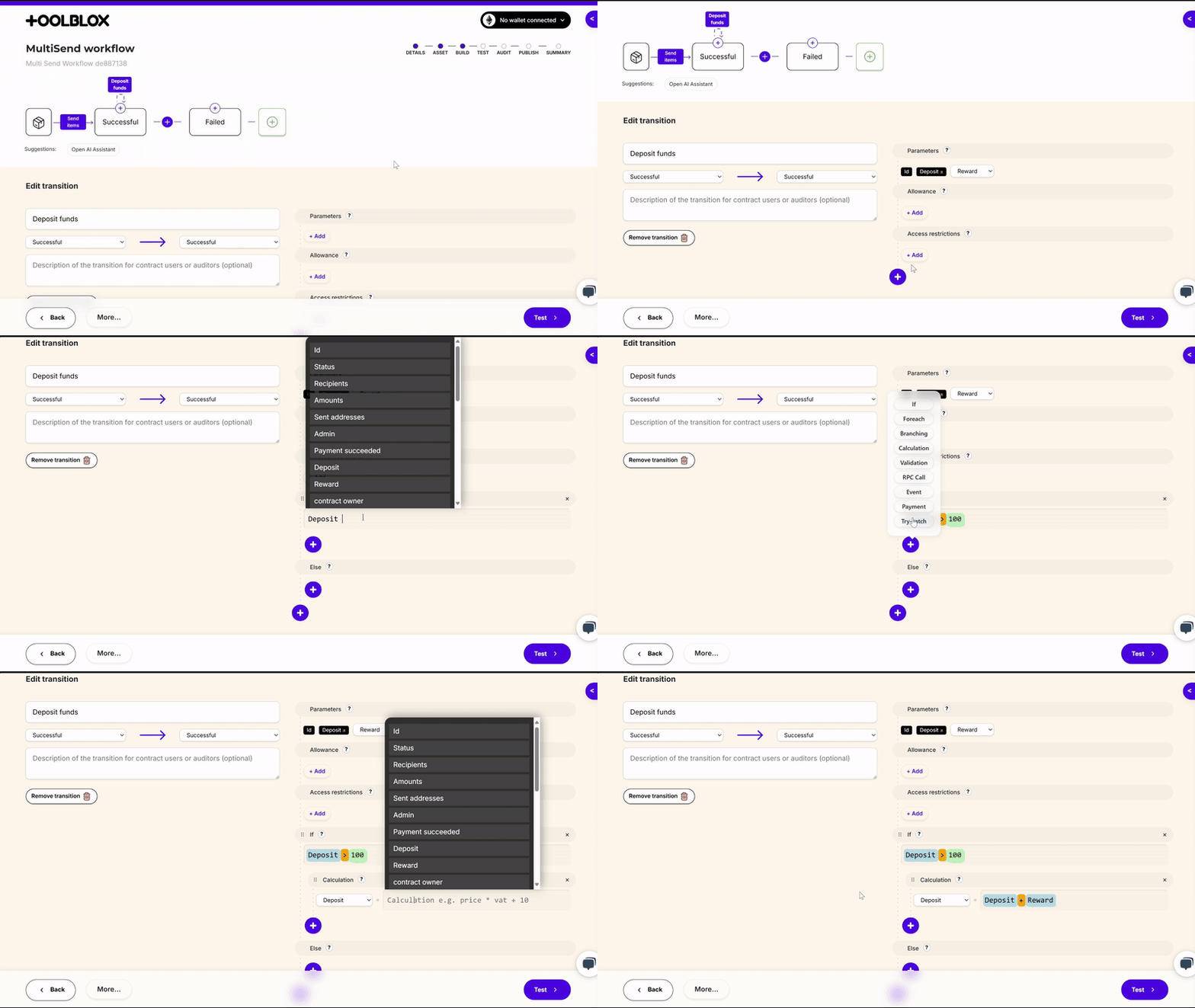
The humble if. While it was possible to add conditions to blocks and use inline assignments (value = something > threshold ? value1 : value2), it is now possible to construct elaborate if-else scenarios with no-code.
New property types
List

A list property type (datatype) enables to inject smart contract multiple values of the same type. List properties can be used as part of for-each loop. There are also some handy functions that can be used as part of property calculations such as List.Count(list):

Map

Mapping property type is like a key-value pair. For example, mapping with key type Address and value type Integer can be used to define fractional ownership of an entity. As with List property type, there are handy methods to work with Map type:

Custom types
Sometimes simple types are not enough and that’s where the new custom type features come into play. It lets you define container object with multiple properties. This container object can be used to encapsulate method parameters for example.
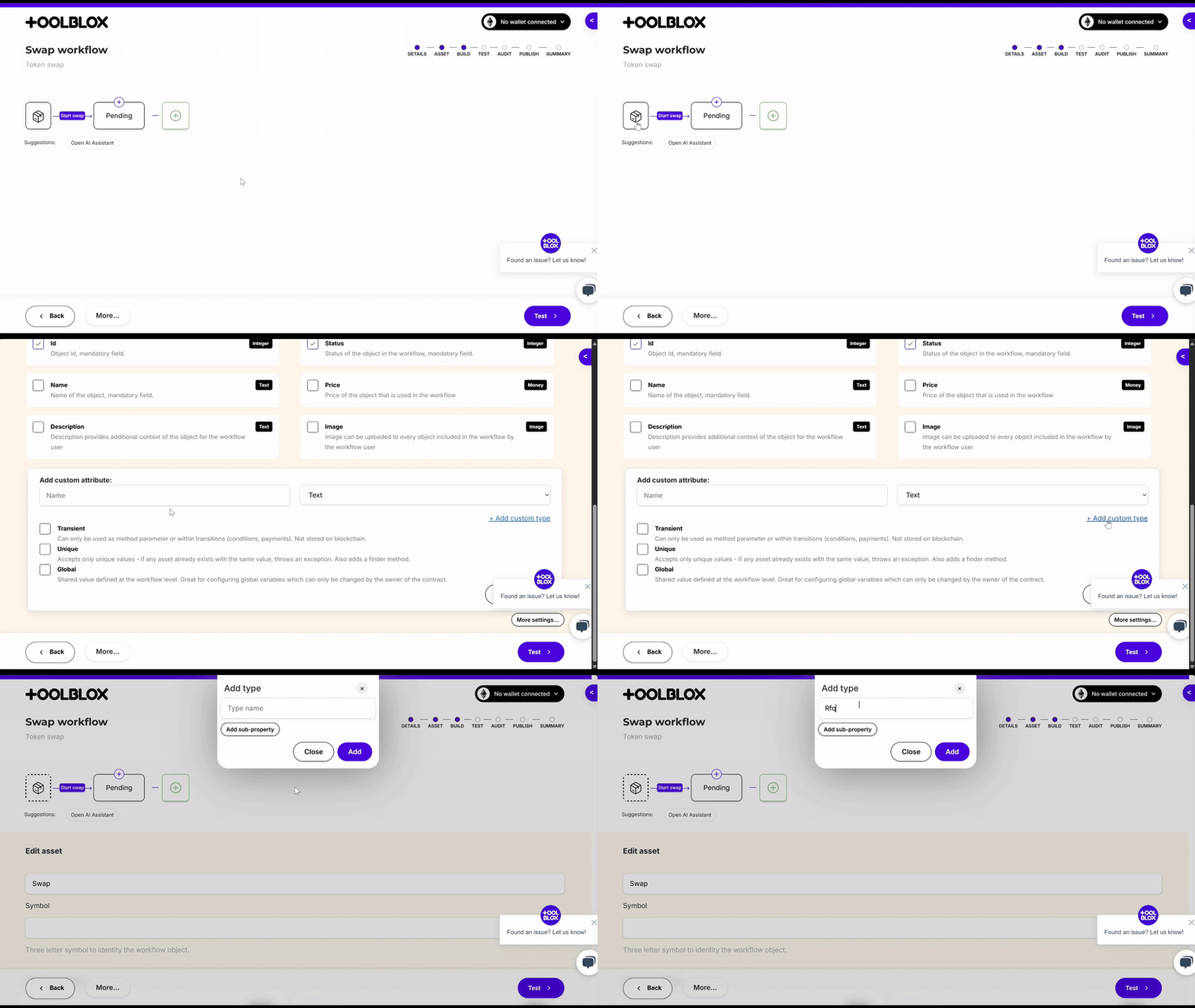
Hash
The hash datatype (bytes32 in Solidity) and the complementary function ‘Utils.Hash( item1, item2, … )’ are useful in advanced validation scenarios.
Global methods
It is now possible to leave both from and to states as empty in a transition to create general methods that can only work with transient or global properties. This feature lets you create advanced scenarios to change global properties or multiple global properties at once.
Oracles support
Already announced last year, it is now possible to create an oracle data type and access its values.
To define an oracle create a property of type Oracle. Then choose the oracle provider (Quex, Chainlink or 1Inch) choose the property from where to get the asset to query or alternatively hardcode the asset name into the fallback:

Advanced AI support
All of this goodness is available to the Toolblox AI as well. So go to ChatGPT — ToolBlox to use our GPT or just use the built-in AI assistant directly to get things done.
Summary
2025 will be an important year for Toolblox and we are proud to leap into it with a much more powerful and capable engine. There are some great new integration scenarios just around the corner. Whether you are a freelancer, no-code agency or you just have a great blockchain service idea — we are happy to help you out.
All business settlements will be conducted on-chain in the not-so-distant future so the time to act is now. Let’s launch your blockchain MVP in record time with no-code!
Go to www.toolblox.net to learn more or start building now at app.toolblox.net. You can also reach us at ToolBlox (@tool_blox) / X
Happy new year, fam 🥳!












We use AI extensively: ideating tokenization concepts, designing workflows, modelling scenarios, and generating documentation. AI gives us speed and range that manual consulting alone can't match.
For the actual smart-contract code, we take a different approach: contracts are composed from pre-verified, audit-ready building blocks rather than AI-generated. Think of it as Lego: each block is hand-crafted and tested; AI helps you decide which blocks to use and how to arrange them. This gives you the best of both worlds: AI-driven speed for design, and deterministic safety for the code that holds real value on-chain.
Toolblox offers the flexibility traditionally found in custom development combined with the ease of no-code platforms.
Smart-contract templates, while seemingly convenient, often don't cater to all asset classes or jurisdictions, can stifle business process innovation, and become costly when adapting to specific needs due to re-audit requirements. Custom smart-contract development, on the other hand, is a lengthy and expensive process, requiring specialized skills, and the auditing phase is both costly and time-consuming.
Toolblox composes smart contracts from pre-verified modules. You get a solution tailored to your specific asset, jurisdiction, or business nuance, all while being cost-effective to audit and easy to understand through visual workflows.
You do. You can export the full Solidity source code, auto-generated documentation, and integration specs at any time. Once deployed, the smart contract and its data are entirely yours, with no lock-in or dependency on Toolblox to operate.
Yes. Many teams start with the Smart-Contract Builder to explore workflows and prototypes, then bring in a Tokenization Sprint when they need a full blueprint, spec and rapid prototype for a specific deal structure. Everything you build in the self-serve tool carries forward.
Tokenization transforms traditional business protocols into self-executing smart contracts, streamlining operations and ensuring clarity.
- Efficiency in Operations: Self-executing contracts automate processes, speeding up operations like reconciliation, administration and settlement.
- Reduced Miscommunication: With every term and condition explicitly coded, there's less room for misunderstandings or disputes.
- Clarity in Business Protocols: Tokenized assets come with predefined rules and protocols, making business operations clearer and reducing ambiguities.
- Liquidity: Assets, even traditionally illiquid ones like art or real estate, become easily tradable, enhancing their accessibility.
- Fractional Ownership: Tokenization divides assets into smaller units, allowing more investors to partake in high-value asset ownership.
- Transparency: Every transaction is transparently recorded on the blockchain, ensuring verifiability by all stakeholders.
- Security: Blockchain's robustness safeguards tokenized assets, minimizing fraud risks.
Integrating smart-contract workflows is straightforward with Toolblox. While there are standard methods like using JavaScript web3 libraries, we offer a user-friendly DApp builder that allows you to embed smart contract actions directly into your solution.
Additionally, for those who prefer no-code platforms, we provide an open API and plugins, including compatibility with popular platforms like Bubble. This ensures a seamless integration tailored to your business needs.
Yes. Toolblox is designed so that non-technical stakeholders can use AI to generate visual workflows and review blueprints. Technical teams can then refine the workflow and export source code.
For the Tokenization Sprint, you only need to describe your deal logic and we handle the rest, delivering a reviewable spec and working prototype.
Cross-workflow calling is built into the builder. Any workflow can call any other workflow, enabling complex multi-asset scenarios and DeFi integrations.